
The problem: You want your collection to grow, but new releases and impulse buys make that expensive fast.
The short route: Work with a monthly amount, buy for a listening moment, and spend the first money on what you already have.
Agree on a monthly amount
A fixed amount per month changes how you buy, not how much fun you have. You do not have to justify anything to anyone, but you do notice when an expensive release crowds out another purchase, and that is exactly the moment you start choosing instead of just picking things up.
Twenty to thirty euros a month is enough for many people, especially if you set part of it aside for second-hand. One new record a month or five second-hand ones: the same outlay with a very different result on the shelf.
Keep a wish list on your phone and glance at it before you pay. The question that works best is not whether you like this album, but whether you will still want it in three months. Whatever is still on the list then is almost always a keeper.
Where the cheap records are
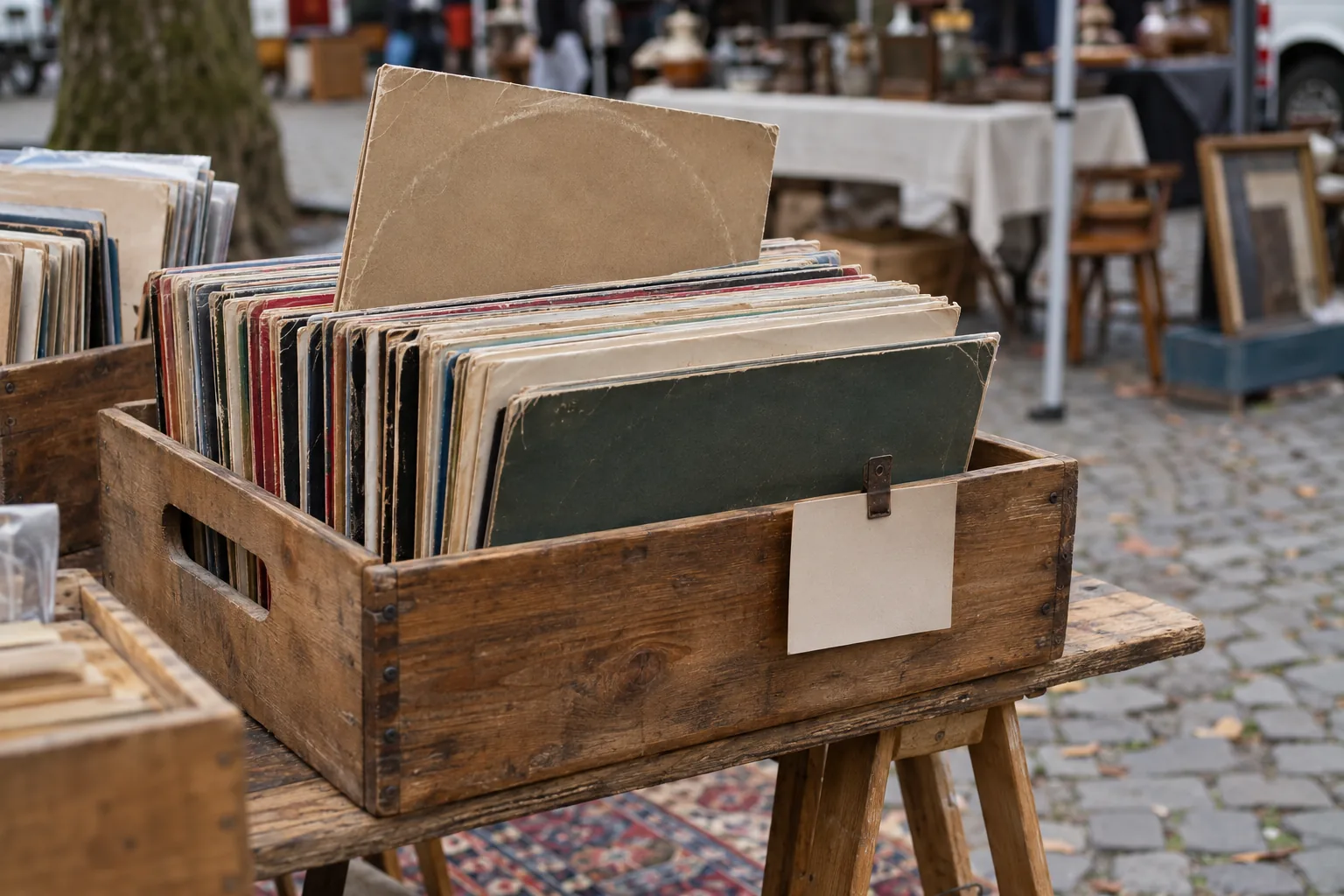
Charity shops are the cheapest and the least predictable: one to three euros a record, lots of Dutch-language and classical, and now and then something you cannot believe is there. The effort depends on how often you go, not on how long you stay.
Flea markets and record fairs sit just above that. At a fair you pay more than at a market, but the records are selected and usually graded correctly, and you can ask questions. The bargain crate in a record shop is the third place, and often the best of the three: it has already been filtered for what is playable.
Online you buy deliberately rather than by chance. You find exactly the title you are looking for, you pay the market price and shipping comes on top, so for collecting cheaply it is the least suitable route. What to look for with second-hand before you take anything home is covered in the guide on buying second-hand vinyl.
The unplayed pile is the real cost
Count how many records you have that you have never heard all the way through. For most collectors who complain about money, there is more value in that pile than in what they still want to buy this year. A two-euro record you never put on is more expensive than a thirty-euro record you play twenty times.
The rule that works best against it is simple: buy nothing new while there are more than three unheard records in the cabinet. That is not a punishment but a filter, and it also makes you play the finds you were so excited about.
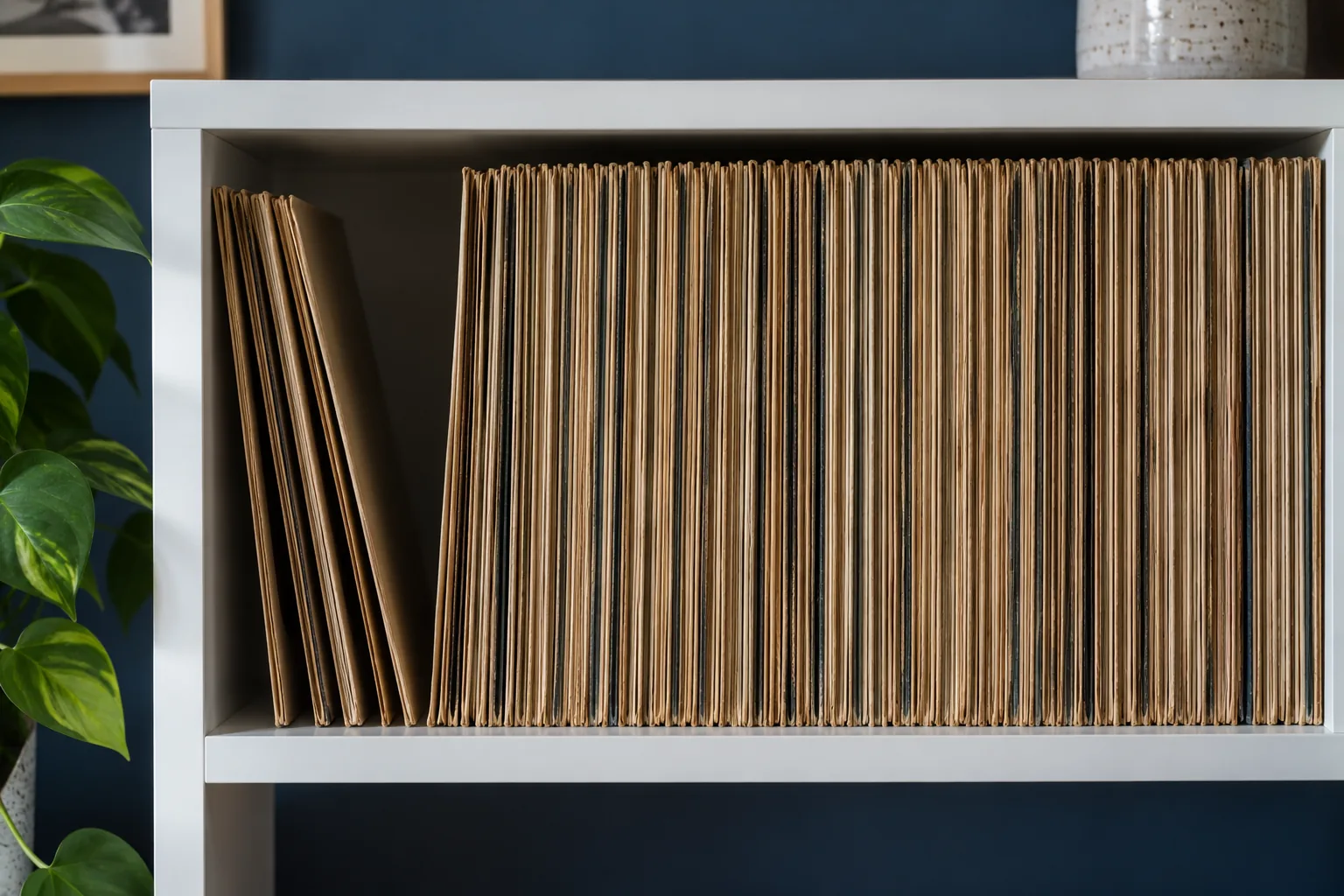
It helps to keep that pile visible. Put whatever you have not heard yet to one side, on the left of the crate or on a shelf of its own, instead of sliding it straight in among the rest. Whatever disappears between two hundred spines does not come out again.
Buy with a moment in mind
For each record, ask yourself when you will play it. On a Sunday morning, on an evening with friends, or because you really want to follow this artist? That way you buy fewer records that only impress on the shelf, and that saves more money than any discount.
It is also the most honest way to deal with a good find. A rare pressing you will not play is not a bargain but a purchase for someone else that you happen to pay for yourself.
Second-hand shops are ideal for curiosity, but set a limit. One unknown find per visit keeps it exciting without the unheard pile growing.
What not to pay for on a tight budget
Three things cost money and rarely give anything back. Coloured vinyl is about looks and in the cheaper editions tends to sound a little worse rather than better. 180 gram is about the weight of the record, not the recording. A limited edition is a selling point, not a mark of quality. What those terms do mean is explained in the guide on giving vinyl as a gift.
The second trap is the new pressing of an album that is lying around everywhere second-hand. For thirty euros you buy a reissue of a record whose original can be found at a market for five euros in fine condition, and sometimes from a better master. Check whether it is out there before you buy the new one.
And then the box set. It looks cheap per record, and it is, but only if you really listen through it. On a tight budget you are better off buying three albums you know than eight you have to discover. If you do want to get to know an artist completely, the CD version of that same box is often a fraction of the price; that is covered in the guide on collecting CDs.
The first money goes to what you already have
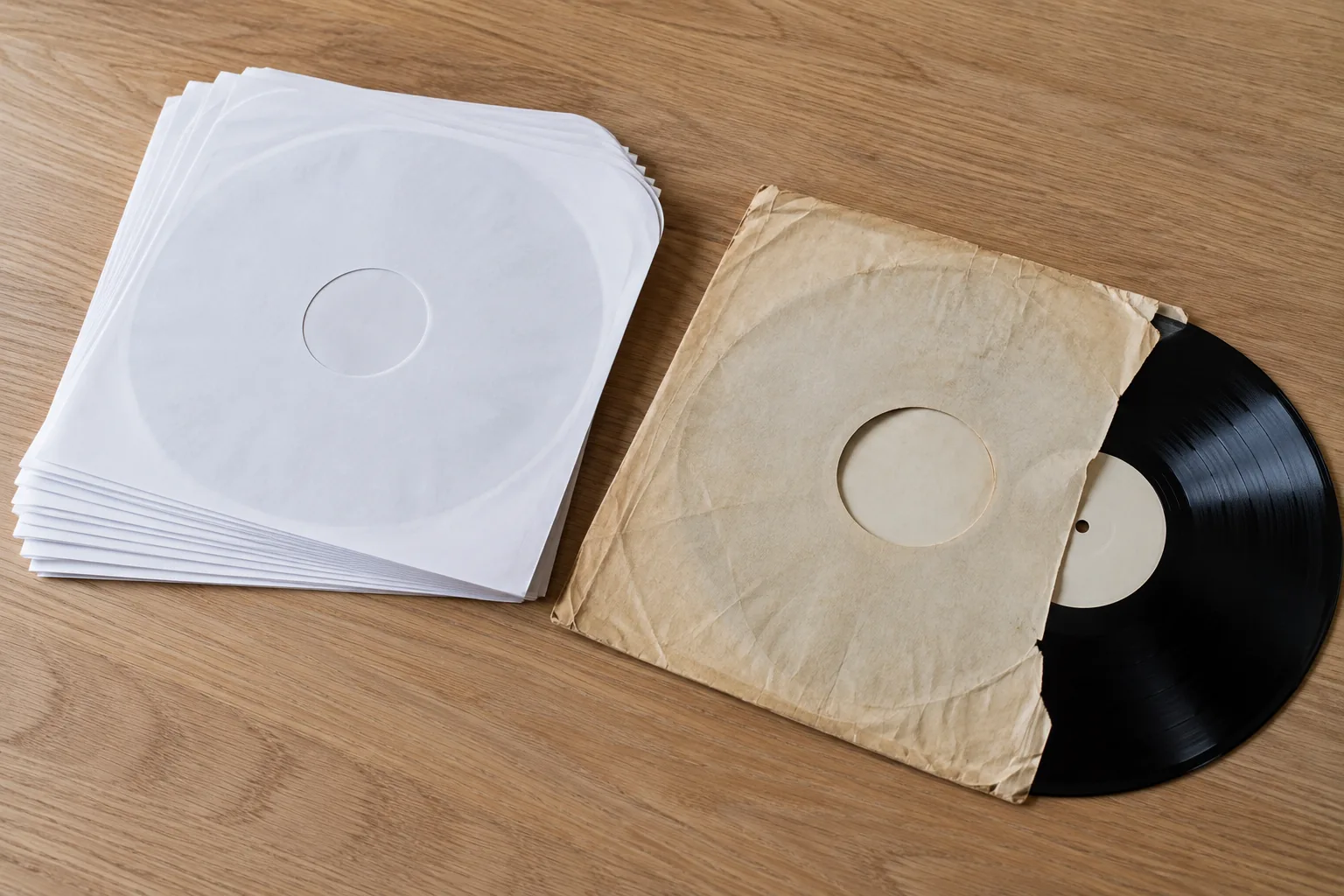
This is the advice that pays off most and is given least: if there is money this month, spend it on the records already in your cabinet. Fifteen euros on anti-static inner sleeves does more for how your collection sounds than a sixteenth album.
A worn stylus is the most expensive economy there is, because it damages every record you put on afterwards, and that damage does not come out. Whether replacing it is needed, and how to tell, is covered in the guide on replacing the stylus.
Cleaning costs almost nothing and changes the most. A record you wash properly for the first time often sounds like a different copy, and that applies above all to the cheap second-hand finds your collection grows from. How to go about it without making it a ritual is covered in the guide on cleaning records.
Let go of what you no longer reach for
Your collection is not an archive. Records you never put on again can give someone else a lot of pleasure, and swapping or selling frees up space in the cabinet and in your wallet. On a tight budget it is also the only addition that pays for itself.
Be honest about it, though. A record you have not played for two years but are attached to does not have to go; a record you bought because it seemed a good deal does. By choosing now and then what may stay, the collection becomes more yours and less the market's around you.
What a collection is worth
The price of a record and its value have little to do with each other. The measure that counts is how often you put something on, and by that measure a cabinet of a hundred well-chosen second-hand records easily beats a cabinet of thirty expensive editions.
That is also why this piece does not recommend anything to buy. A collection does not get better from the next album, but from the evenings when you pull one out. How to make room for that without turning it into a schedule is covered in the guide on the listening evening.
Frequently asked questions
- How much money do you need to start a record collection?
- For the records themselves, not much: twenty to thirty euros a month is enough, especially second-hand, where that buys five to ten records. The bigger expense is the turntable. Alongside the records, budget for inner sleeves and a new stylus now and then, because that decides more about how it sounds than the next album.
- Where do you buy cheap records?
- Charity shops are the cheapest, one to three euros, but unpredictable. Flea markets sit just above and record fairs above that, with better graded records. The bargain crate in a record shop is often the best of the three, because it has already been filtered for playability. Online you buy deliberately, at market price plus shipping.
- Is coloured vinyl or 180 gram worth the extra money?
- Not on a tight budget. Coloured vinyl is about looks and in cheaper editions tends to sound a little worse. 180 gram is about weight and warping, not about the recording or the master. Limited edition is a selling point. An ordinary edition of a good pressing is almost always the better buy.
- How many records should you buy each month?
- Fewer than you can listen to. A practical rule: buy nothing new while there are more than three unheard records in the cabinet. Keep that pile apart where you can see it, because whatever disappears among the rest does not come out again.