
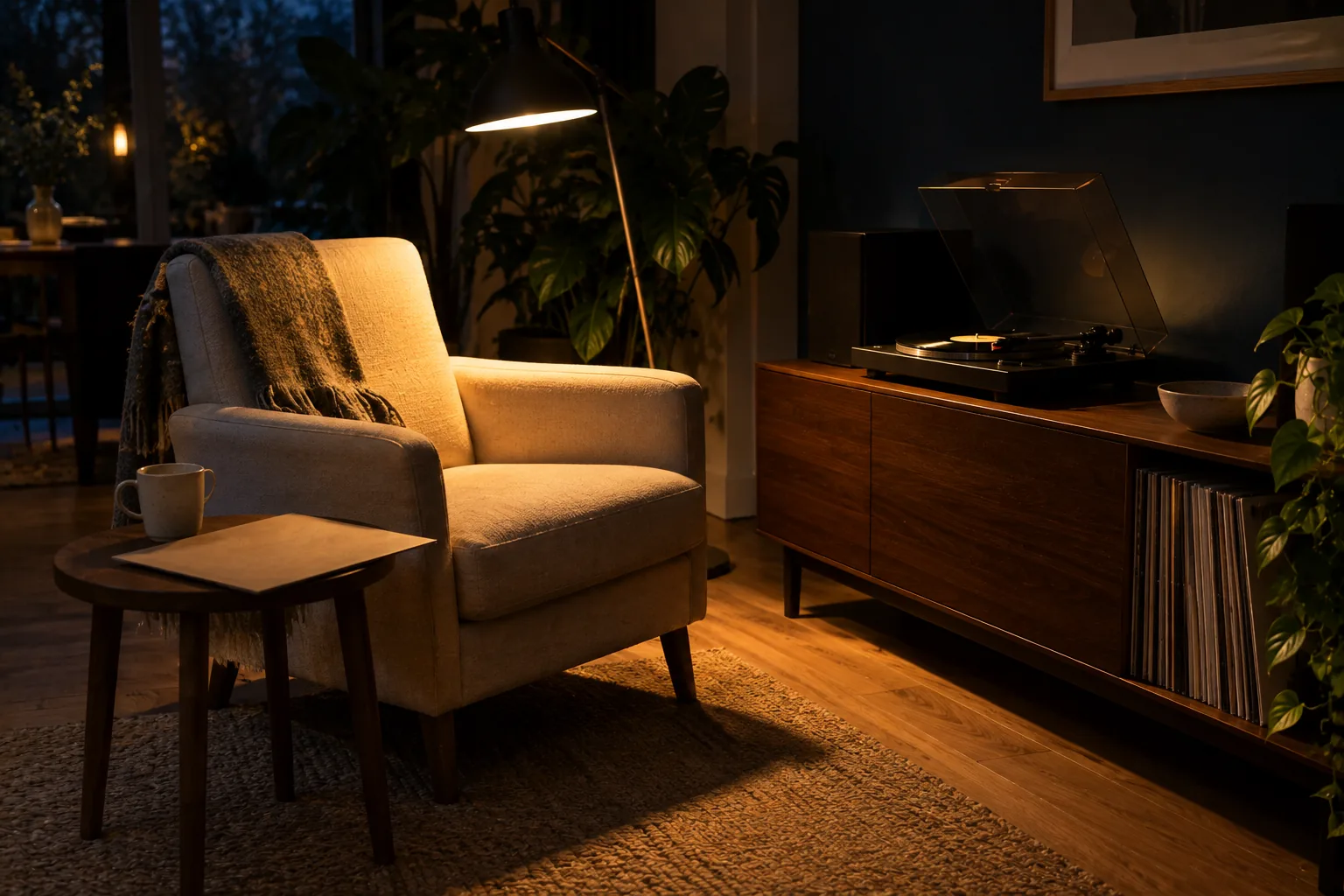
The problem: You have plenty of music, but you listen in fragments and never get round to albums that ask for attention.
The short route: Take a small fixed moment, one side, and make starting cost nothing.
Keep the start small
You do not need to clear an evening. One side of a record lasts eighteen to twenty-two minutes, and that is the whole commitment. Get something ready before you start cooking, or pick a record for straight after dinner; a ritual lasts as long as starting costs almost nothing.
That is meant literally. Count the steps between you and the first note: if there are more than three, it will not happen on a weekday evening. The chair clear, the record within reach, the amplifier on with one button.
You are agreeing on attention with yourself, not discipline. An evening when it does not work out is not a broken promise, and a ritual that makes you feel bad will not last a month.
Choose beforehand, not in the moment
The real obstacle is not time but choice. In front of a cabinet with two hundred records, choosing takes more energy than listening, and when you are tired the phone wins that choice. Every time.
The solution is to move the choice to a moment when it costs nothing. On Sunday, set aside three records for the week, or put what you want to hear at the front of the crate next to the turntable. Then in the evening you do not have to choose what to hear, only to sit down.
That is also why a small crate by the turntable does more for your listening habit than any purchase. How a row like that without any order works alongside an organised cabinet is covered in the guide on organising your collection.
Put your phone in another room
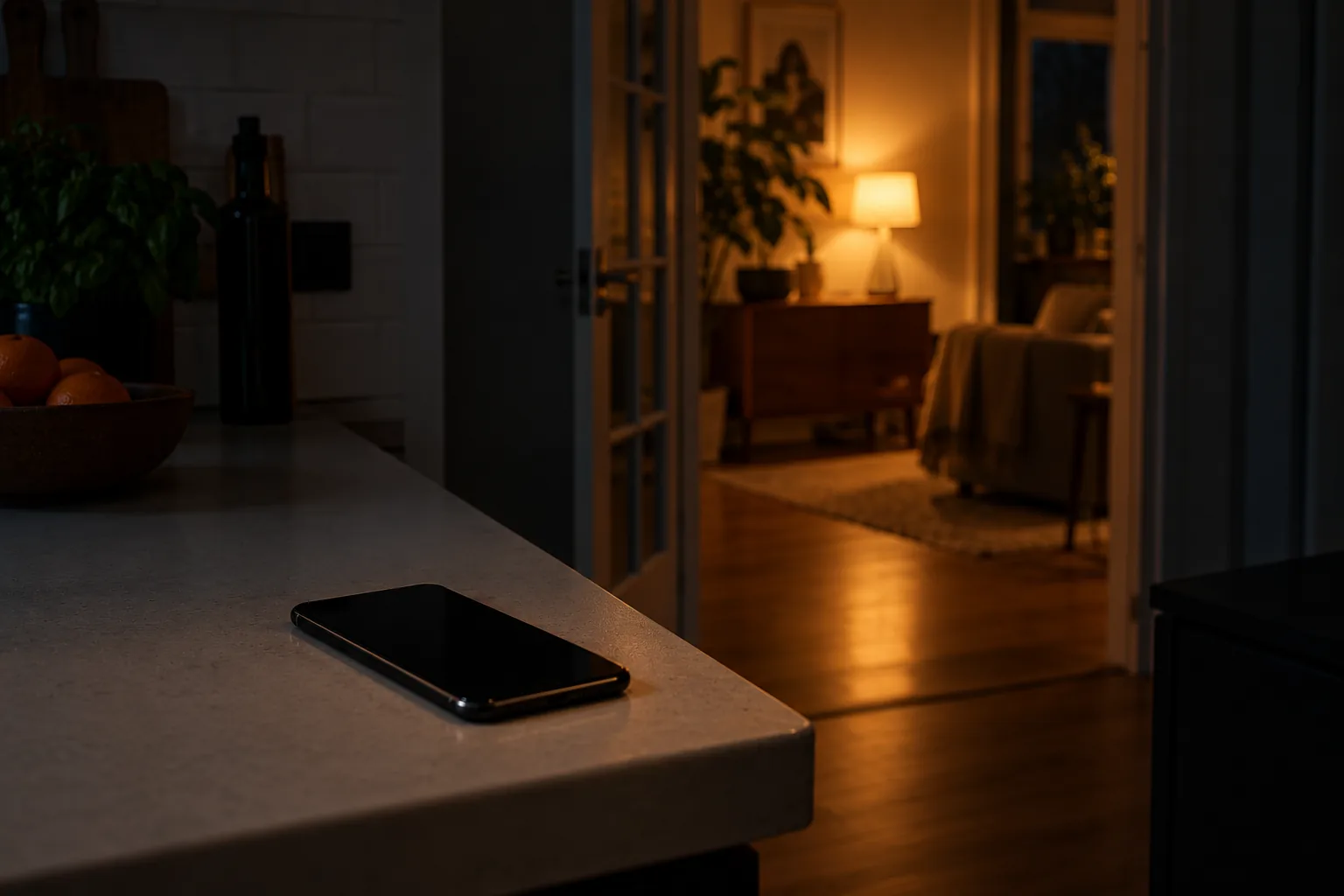
You do not have to go on a digital fast, but turning the screen face down is not enough. A notification you see costs you the rest of the track, and an album you only hear in pieces never gets the chance to go anywhere.
So put it in another room, not on the table. That sounds strict and is the opposite: you do not have to restrain yourself for twenty minutes, because the choice has already been made. It helps most with music that does not demand attention straight away, and that is exactly the kind of music evenings like this exist for.
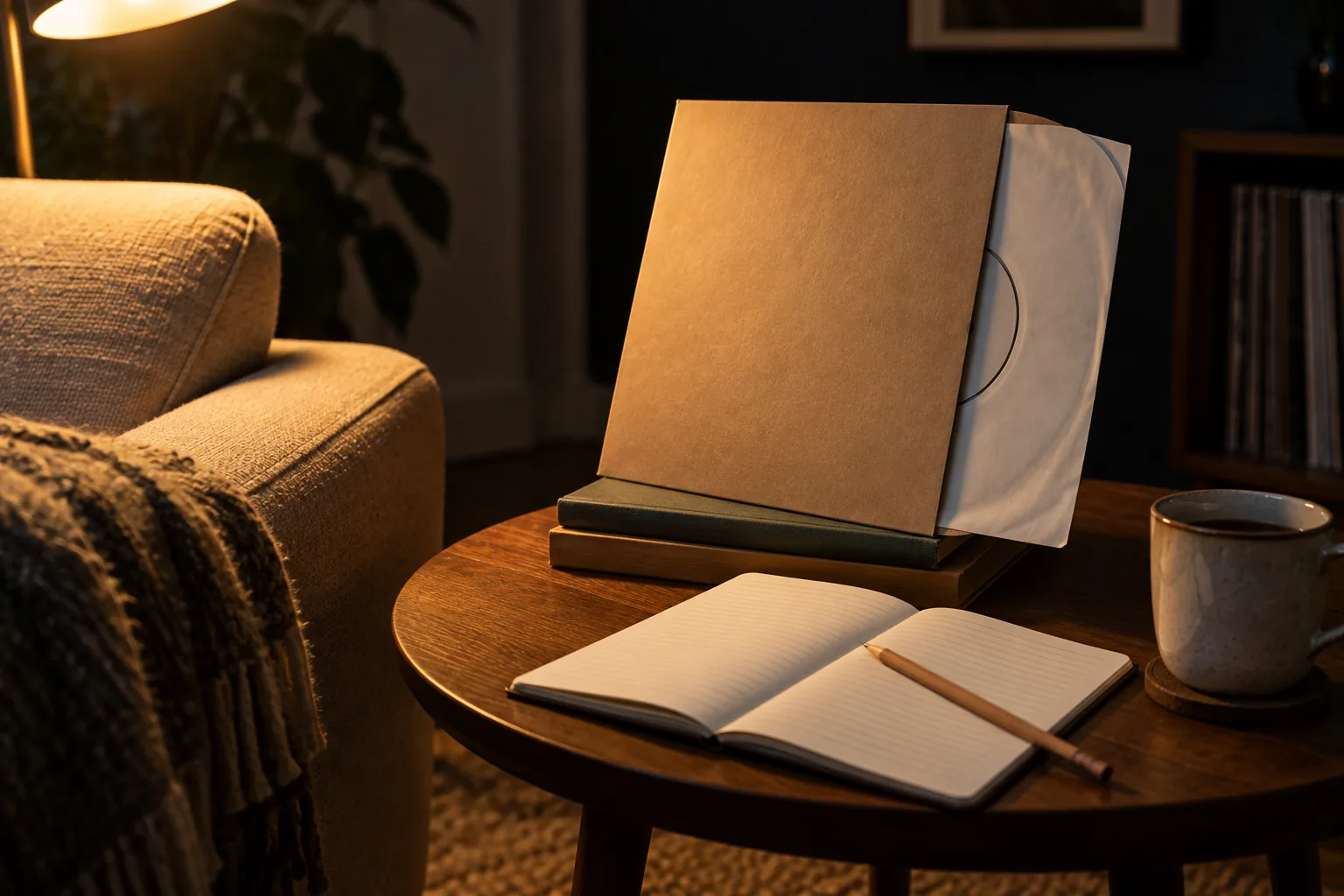
If you like, write one line in a notebook. Not a review, just a reminder: what stood out, which line stuck, what you want to play next.
Give your hands something to do
Most people who say they cannot listen mean that they cannot sit still. That is not a character flaw. Doing nothing for twenty minutes feels like wasted time to almost everyone, and that resistance beats every good intention.
The answer is not more discipline but something for your hands. Reading the sleeve is the classic example, and it works because it is about the music that is playing: lyrics, who played on it, where it was recorded. A notebook, a sketch, folding the washing, peeling potatoes: all fine.
The line is simple. Anything that uses words does not go with music you want to listen to, so reading and answering messages are out. Anything that keeps your hands busy and leaves your head free actually helps.
One side, not one evening
The side change is often presented as a drawback of vinyl, but for a listening habit it is the best feature the format has. After twenty minutes you get up, and then you choose again: another side, or done. Nobody has to keep listening because they started.
So agree on one side, not one album. A forty-minute commitment gets skipped on a Tuesday; twenty minutes does not. And in practice you usually just turn the record over, because getting up turned out not to be the problem.
The same works for a CD with a small trick: stop it after six tracks or so if you notice your mind wandering. An album heard in two sittings is better heard than an album half heard.
Feel free to play the same thing again
A listening evening does not have to be about something new. On a second or third listen you hear different things: the structure rather than the melody, a counter-melody you missed before, a moment you now know is coming. That is how a collection becomes worth more without you buying anything.
New music also asks the most of you at the moment you have the least to give. An album you know is the better choice on a tired evening, and it is often the evening you get the most out of it.
Alternate between new and familiar without making it a schedule. You are not building a perfect routine; you are giving music the time you had already set aside for it.
Listening together
Listening to a record together is something different from having music on while you talk, and the difference lies in one agreement: whoever chose the record does not explain it. No background story beforehand, no pointers during the listen about what is so good about the third track.
A workable format is taking turns, one side each. The other person hears something they would never have put on themselves, and you hear your own record differently because someone is sitting next to you. Talking is allowed afterwards, and that conversation is usually better than the one you would have had over the top of it.
It also works with people who know nothing about music, precisely because nothing is asked of them. Twenty minutes and a chair is the whole threshold.
When it does not happen
There are weeks when it does not work out, and nothing is broken. The only thing that really kills a listening habit is the feeling that you have failed to do something you set yourself. That is where people give up, not at a missed evening.
In a week like that, lower the bar to one track. Put on the record you know best, stay standing if you want, and let it play out. That is not a watered-down version of the ritual; that is the ritual: the record goes on and the phone is somewhere else.
And if it does not happen for months, it is usually not you but the setup. A chair that is not clear, a turntable that stands behind something, a cabinet where you cannot find anything. What to do about that is covered in the guide on setting up a listening corner.
Frequently asked questions
- How long is one side of a record?
- Usually eighteen to twenty-two minutes. That is also why a side is a pleasant unit to start with: you commit to twenty minutes instead of a whole album, and at the side change you choose again whether to carry on.
- How do you turn listening into a habit?
- By making starting cheap. Count the steps between you and the first note: with more than three, it will not happen on a weekday evening. Also choose beforehand which records are ready for the week, because choosing in the moment takes more energy than listening.
- Should you sit still and do nothing while listening?
- No, and for most people that actually backfires. Give your hands something to do that does not use words: reading the sleeve, drawing something, folding the washing. Reading and answering messages are out, because language and music ask for the same attention.
- New music or something you already know?
- On a tired evening, something you know. New music asks the most at the moment you have the least to give, while a familiar album actually reveals new things on the second or third listen: the structure, a counter-melody, a moment you know is coming.