
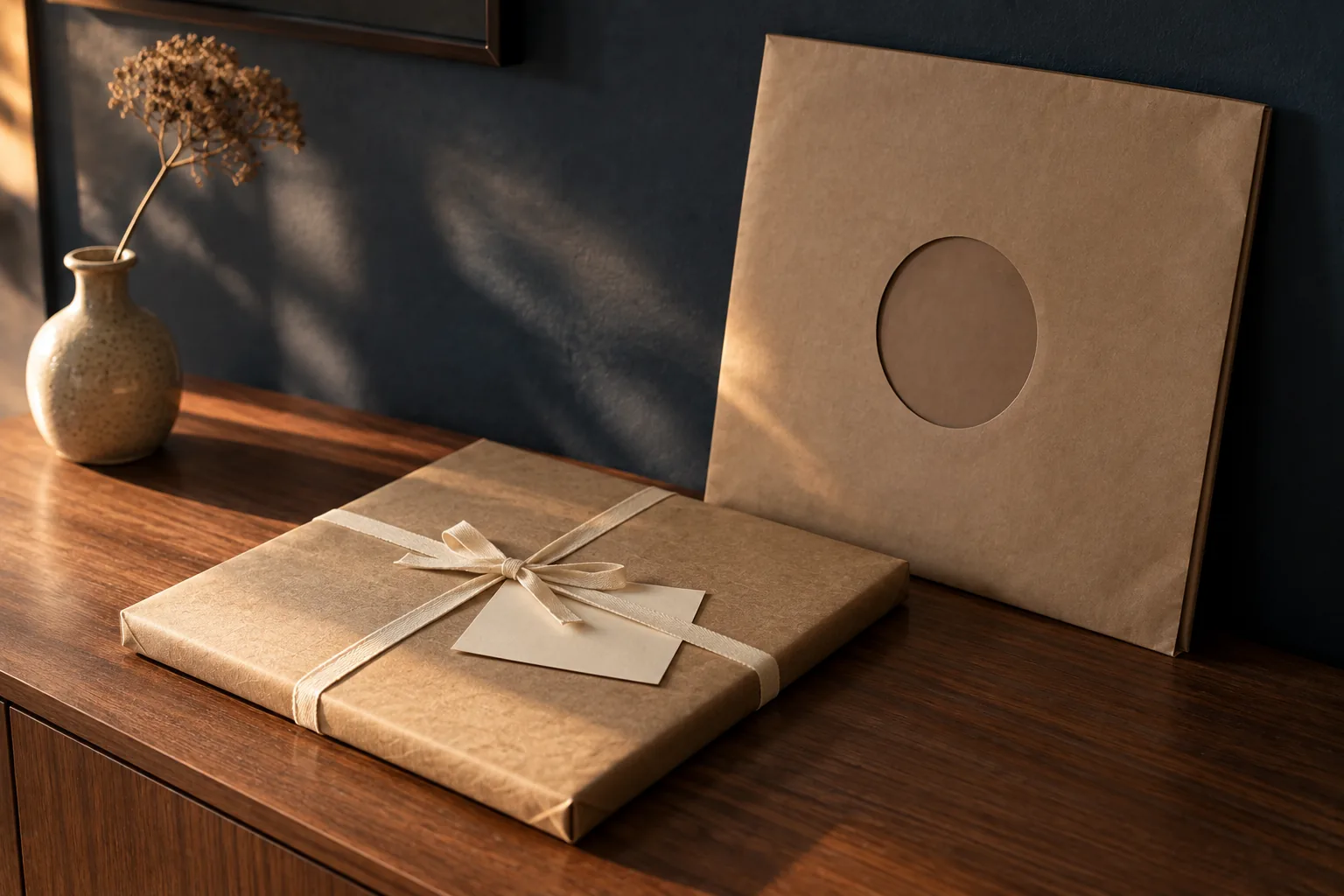
The problem: You want a music gift that feels personal, without gambling on an obscure release.
The short route: Start with a habit, check the format and the edition, and write one sentence to go with it.
Start with a habit
This guide assumes you know something about the person receiving it. Not their whole taste, but a habit: they always cook with music on, the same artist goes on in the car every time, they have just bought a turntable. A habit tells you more than a list of favourite genres, because it tells you when the record will be played, and that is exactly what goes wrong with gifts that end up on a shelf.
So think first of a moment rather than a title, and find an album for it. Someone who cooks on Sunday mornings needs something different from someone who listens in the dark after eleven. Someone who has just got a turntable mainly needs something that sounds good straight away and does not need explaining.
Then choose an album that stays approachable. A first pressing by an unknown artist can be beautiful, but a strong live record, a good reissue or an album with a story attached is a safer gesture. The question is not whether you find it special, but whether it still comes out of the cabinet in six months.
Check that it can be played at home
Find out tactfully whether they play vinyl, use CDs or both. A well-meant LP with no turntable becomes an object, and the kind of object that makes the recipient feel something is still expected of them. For someone with a compact collection, a CD can be exactly right.
Check the speed as well. Some albums, especially audiophile reissues, come on two records at 45 rpm instead of one at 33. They often sound better, but they need a turntable that can do 45 and someone willing to get up more often. For a first turntable, an ordinary 33 rpm edition is the kinder gift.
Finally, check that the thing fits where the rest is kept. A five-record box set in a sturdy case is twice as thick as an ordinary sleeve and often does not fit in a cube shelf, which is where almost everyone keeps their records. What does fit, and why, is covered in the guide on buying a record cabinet.
What 180 gram and coloured vinyl really mean
The front of reissues lists three things that are presented as quality and only partly are. 180 gram refers to the weight of the record, not to how it sounds. A heavier record lies more stably and warps less easily, which is a real gain for storage, but it says nothing about the recording or the pressing it comes from.
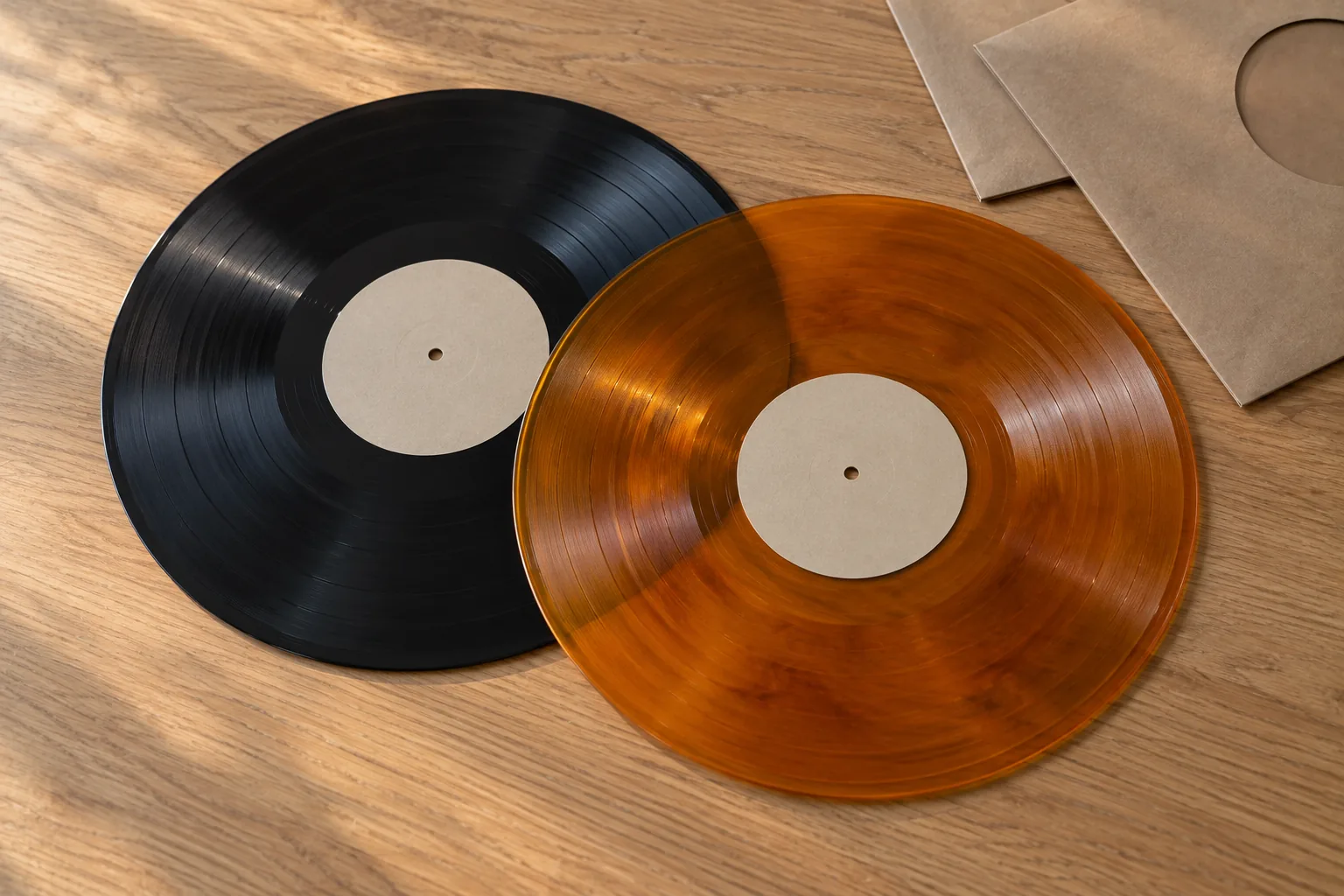
Coloured vinyl is mainly something to look at. The mix with colour pigment is usually a little less even than plain black, and many collectors find that the cheaper editions audibly hiss a little more. As a gift it is a fine gesture when the recipient loves the object, and the wrong choice when they mainly listen. A picture disc is that choice squared: lovely on the wall, and of all the editions the one that sounds worst.
Remaster says that something has been done to the sound, not that it has got better. Some reissues are carefully made from the original tapes; others are pressed from a digital file that has been made louder and sounds flatter as a result. So the edition itself is no seal of quality: a tidy standard edition of a good pressing beats expensive packaging.
New or second-hand
A second-hand record can be a better gift than a new one, and sometimes exactly the wrong one. It works when the album is no longer available new, when the recipient digs through markets themselves, or when there is a story that the record carries. It does not work when you mainly wanted to save money, because that is exactly what the recipient sees when they open the sleeve.
If you give second-hand, buy on condition and not on price. Take the record out of the sleeve and tilt it into the light: dull patches and scratches you can feel with your nail, you will also hear. A musty or torn inner sleeve can be replaced for a euro or two, and that is worth doing for a gift. What else to look for is covered in the guide on buying second-hand vinyl.
Then clean it before you wrap it. A second-hand record that sounds good straight away is a gift; one that clicks and hisses first is a chore you have passed on.
How to find out what someone already has
The biggest fear with this gift is a duplicate. It is easier to avoid than it seems, and almost never by asking directly. Many collectors keep a wish list online, and those who do usually like talking about it. A housemate or partner can run along the cabinet in two minutes.
If you cannot find out, choose something that can stand next to an existing record rather than resemble it. A live recording by an artist whose studio albums they have, an album by a musician who played on those records, or the follow-up to the album you have seen them play. That is also a nicer gesture than the safest greatest hits album, because it shows you were paying attention.
And if it is a duplicate after all: with vinyl that is no disaster, as long as the receipt is included. Ask for one in the shop and put it in the sleeve, not in the wrapping paper.
Carrying, storing and wrapping
A record can take a knock but not two things: heat and weight in the wrong place. Do not leave it in a car in the sun, not even for an hour, because an LP warps at surprisingly low temperatures. Until the day itself, keep it upright in a cabinet, not flat under a pile and not leaning against a wall, because a record that leans for weeks stays crooked.
Do not keep it on the windowsill or above the heating either, and take off the cellophane if the shrink wrap is tight around the sleeve. Tight wrap pulls at the edges when the temperature changes and bows the sleeve; for a gift that has to wait a few weeks, that is a real risk.
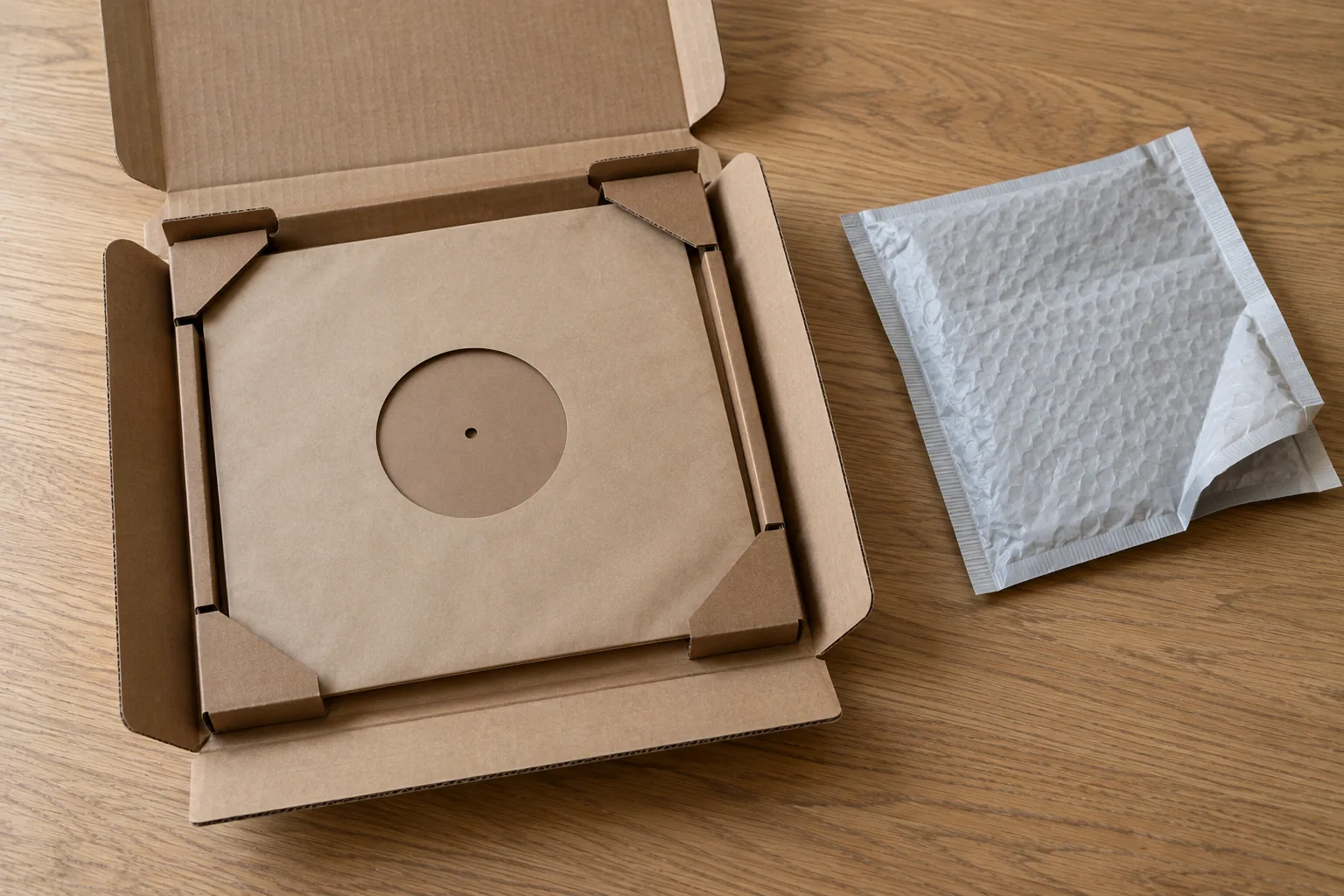
If you send it, use a proper record mailer and not a bubble envelope. An envelope does not protect the sleeve from the edge of a letterbox, and the corner of a sleeve is the first thing to get damaged. Preferably wrap it without tape on the sleeve itself.
What it costs
A new LP usually costs between 25 and 35 euros, a double album or an audiophile edition between 35 and 60, and a box set runs from 60 to well beyond. Second-hand starts at a few euros at a market and climbs quickly for sought-after titles.
It is one of the few gifts where spending more rarely works better. A thirty-euro album that fits a habit gets played; a hundred-and-twenty-euro box set that does not fit in the cabinet gets admired and put away. If you want to spend more, give two records that belong together rather than one expensive edition of something the recipient already knows.
An outer sleeve for a few cents is a small gesture that gets noticed. It shows you know how someone treats their records, and it protects exactly the corner that would otherwise fray first.
Write one sentence with it
A card saying why you chose this album turns the purchase into a memory. No essay needed. One concrete association is enough: a drive, a conversation, an evening, a voice they ought to hear. Without that sentence it is a record; with it, it is a reason to put it on.
Put the sentence on a card and not on the sleeve itself. Writing on a record sleeve lowers its value and, more importantly, cannot be undone if the recipient ever passes the record on.
The strongest addition is an offer rather than a wish: that you will play it together some time. A listening evening does not have to be anything special, and how to keep it from becoming a schedule is covered in the guide on the listening evening.
Frequently asked questions
- What do you give someone who has just got a turntable?
- An ordinary 33 rpm edition of an album they already know and like. No box set, no 45 rpm edition on two records and no rare pressing. With a first turntable, the best gift is the one that sounds good straight away and needs no explaining, and an outer sleeve with it is a small gesture that gets noticed.
- Is coloured vinyl better than black?
- No, it is mainly nicer to look at. The mix with colour pigment is usually a little less even than black vinyl, and in the cheaper editions it audibly hisses a little more. As a gift it works well for someone who loves the object and less well for someone who mainly listens. A picture disc sounds the worst of all the editions.
- Is a second-hand record a good gift?
- Yes, if you buy on condition and not on price. It works best when the album is no longer available new or when there is a story attached. Take the record out of the sleeve and tilt it into the light, replace a musty inner sleeve, and clean it before you wrap it. A record that clicks first is a chore rather than a gift.
- How do you know whether someone already has a record?
- Usually through someone else: a housemate can run along the cabinet in two minutes, and many collectors keep a wish list online. If you cannot find out, choose something that sits alongside an existing record rather than resembling it, such as a live recording by an artist whose studio albums they have. Ask for the receipt in the shop and put it in the sleeve.