
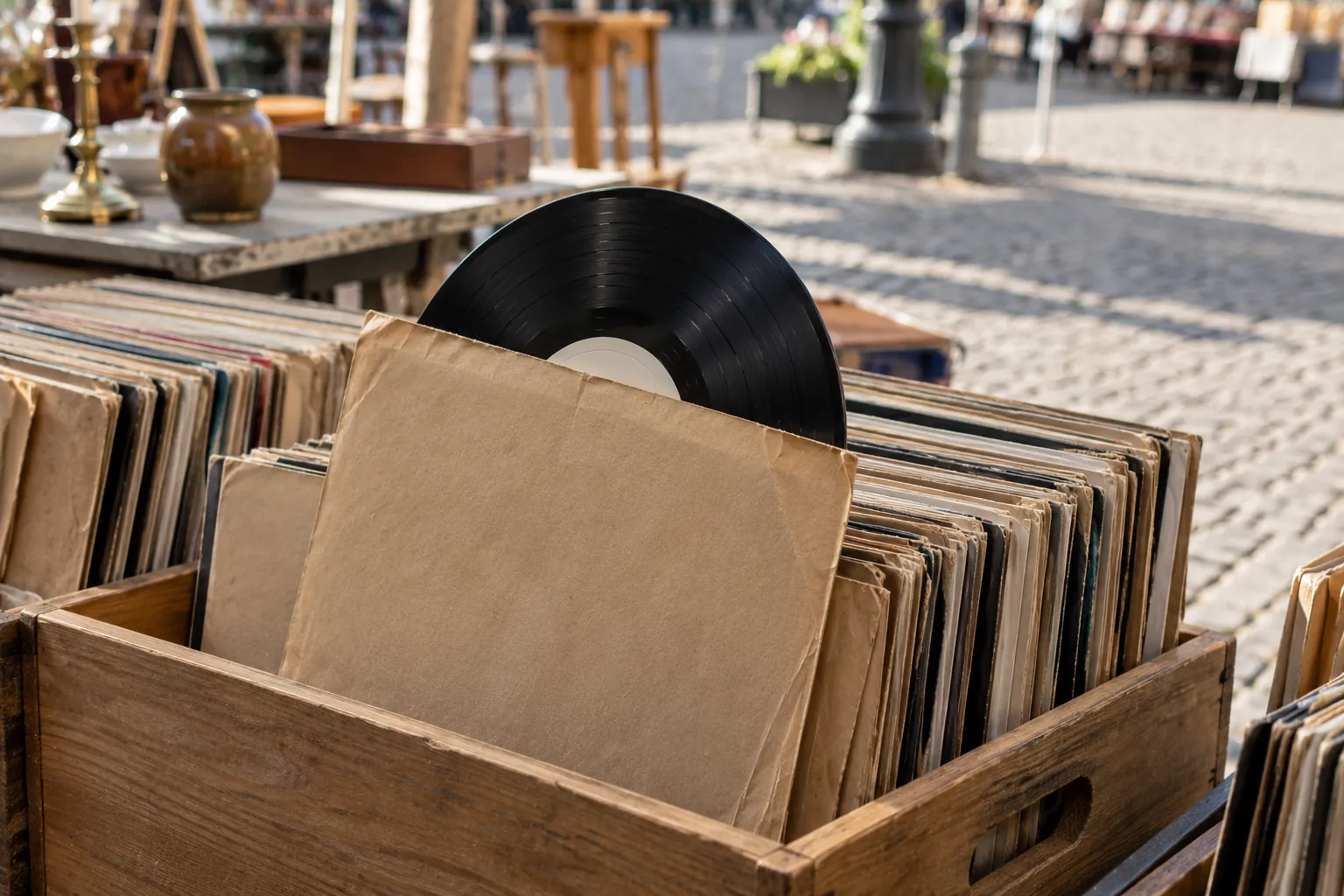
The problem: A second-hand crate feels like a treasure chest, but you do not want to come home with a worn-out or wrong pressing.
The short route: Check the groove, warping, sleeve and edition before rarity goes to your head.
Tilt the record into the light
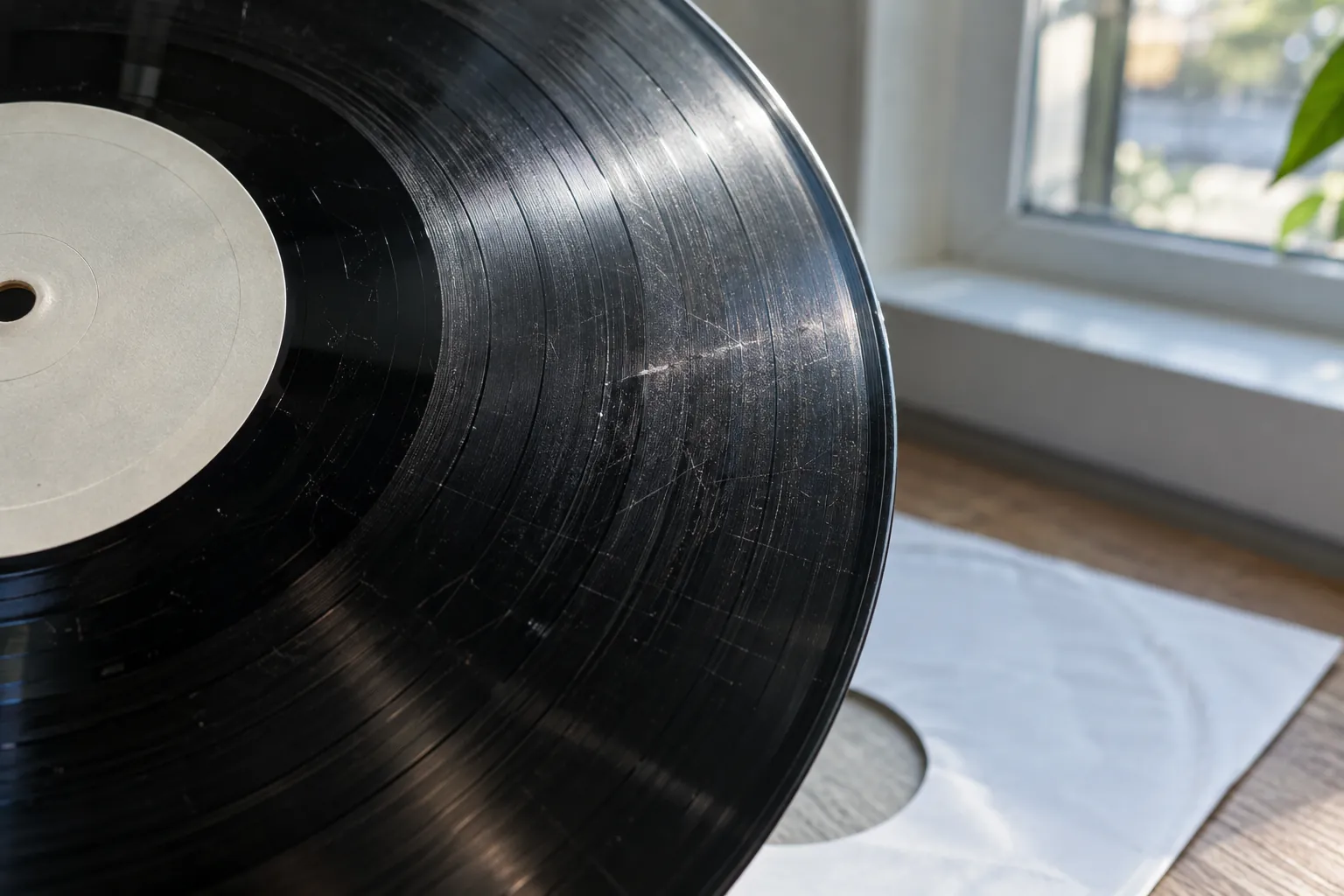
Slide the record carefully out of its inner sleeve and tilt it towards the light. Surface scuffs are something different from scratches you can feel. If you see deep lines running across the grooves, be careful. Check straight away that it lies flat and does not ripple.
A beautiful sleeve says nothing about the playing surface, and a clean record in a worn sleeve can be an excellent buy. Decide beforehand what matters to you: listening, collecting, or a bit of both.
Run a fingernail gently over a scratch: if it catches, you will hear it as a click or it will skip; if it glides over, it is a scuff you rarely hear. Look at the label too. A label with lots of fine scratches around the hole belongs to a record that has been on and off the spindle a lot, so played a lot. A grey, dull haze over the grooves is dirt and comes off at home; a grey haze that stays after cleaning is groove wear from a worn stylus, and that never comes out.
What the condition grades mean
Almost every dealer and every online seller uses the same scale, usually with two grades: first the record, then the sleeve. Mint (M) is unplayed and rare as a grade; Near Mint (NM) looks new and plays without noise; Very Good Plus (VG+) has light signs of use you can barely hear; Very Good (VG) has visible scratches and audible noise in quiet passages but plays without skipping; Good (G) and below are for the label or the sleeve, not for playing.
VG+ is the best buy for most people: a fraction of the price of NM and a difference you rarely hear at living room volume. Two things to remember: a grade is an opinion, not a measurement, and most sellers grade by eye, not by ear. When you buy online, ask whether the record has been play-tested, and at a dealer ask whether you can hear it. Anyone who refuses is selling by eye.
What the sleeve tells you
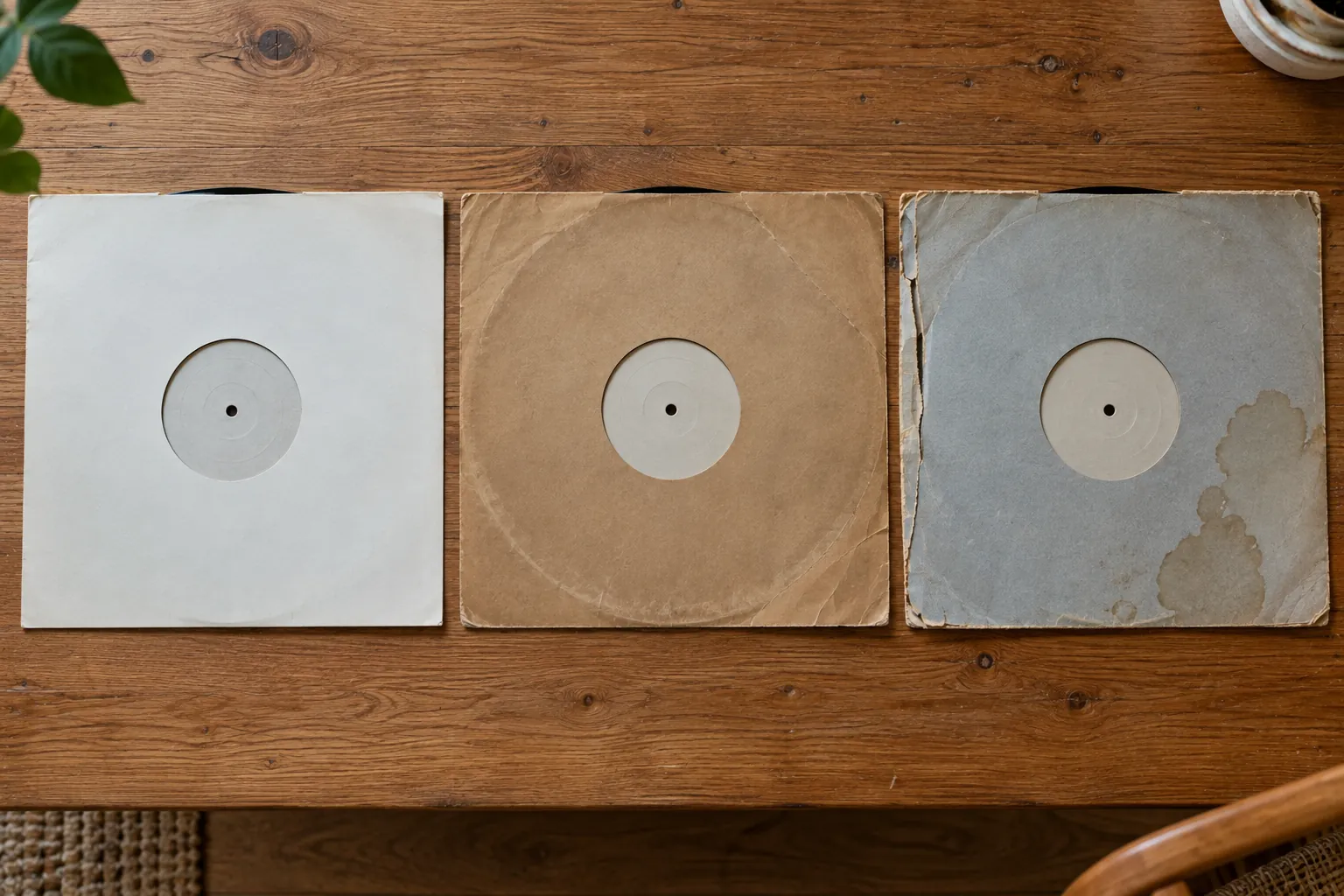
The sleeve says nothing about the playing surface, but a lot about how the record has been stored. A ring worn into the card means it stood tightly in a row for years, usually no problem for the vinyl. A split seam comes from being pulled out too often or from a row that was too tight, and the record inside has often been played a lot too. A water stain or a musty smell is a reason to look at the record extra carefully, because moisture that got into the sleeve also sat on the vinyl, and you can hear mould in the groove.
Finally, notice what is missing: a printed inner sleeve with lyrics or photos, a loose poster, an insert. It makes no difference to listening but it does to the price; a complete copy may cost more, an incomplete one should cost less.
Ask about the edition
Well-known albums often exist in dozens of pressings. Look at the country, year, label and catalogue number if that matters to you. A seller does not have to know everything, but clear photos and an honest description say enough.
Do not let words like rare or original rush you. A record only becomes special when the condition, the edition and your own interest come together.
The catalogue number is on the spine of the sleeve and on the label, and the matrix code is scratched into the vinyl between the last groove and the label. With those two you can find in an online database exactly which pressing it is and what it has sold for recently. Do that before you name a price, not after; it saves both overpaying and leaving a good record behind because it looked expensive.
Where to buy second-hand records
A record shop with a second-hand crate is the safest place: the records are usually sorted and checked, you can listen and you can come back if something is wrong. You pay a little more there, and that is the price of that certainty. Record fairs bring dozens of dealers together in one place and are good for comparing and haggling; go early for the choice or late for the price.
Charity shops and flea markets are cheap and unpredictable: lots of worn records, now and then something special for a few euros, and nobody who can tell you anything about the condition. Give yourself time at the crate there and expect a wet clean at home. Online, on the well-known marketplaces and selling sites, the choice is widest and so is the risk: you buy on photos and the seller's grade, and shipping and any return come on top. Buy online from sellers with lots of reviews, and start with cheap records until you know how strictly someone grades.
What a fair price is
For an ordinary record from a big print run in tidy condition, you usually pay between five and fifteen euros at a dealer and one or two in a charity shop crate. Above that you are paying for three things: a first pressing, a small print run, or demand for a title that has never been reissued. A reissue of a classic is often cheaper new than an original second-hand, and regularly sounds better, because it comes from a clean cut and has never been played.
So always compare the second-hand price with the new price of the reissue. If the difference is small, buy new, unless the original edition is the point for you. If the difference is big, the second-hand record is the better buy, provided the condition is right.
Patience gets you the better copies
Keep a short list of albums you are looking for and compare prices over a few weeks. That takes the pressure off a chance find. A good copy almost always comes along again.
Bring an empty inner sleeve when you pick up something fragile. Then the record does not start rubbing against old paper the moment you get home.
At home, before the stylus goes down
Every second-hand record gets a wet clean first, even if it looks clean: you do not know where it has been, and a previous owner's dirt does not belong on your stylus. How to do that is covered in the guide on cleaning records. Then a clean anti-static inner sleeve, and the old paper sleeve goes with the record in the outer sleeve if it is printed.
Then play it all the way through once, paying attention to the end of each side, where wear becomes audible first. If it disappoints, you know now, while you can still reach the seller and the price is still fresh. If it holds up, you have a record for a few euros that will last for years, and that is why the crate stays worth it.
Frequently asked questions
- What does VG+ mean for second-hand records?
- Very Good Plus: a record with light signs of use that you can barely hear at normal volume, and a sleeve with minor wear. The scale runs from Mint through Near Mint and VG+ to VG, Good and below. With a two-part grade, the first refers to the record and the second to the sleeve. It is the seller's opinion, not a measurement.
- How can you tell whether a second-hand record is good?
- Tilt the record towards the light and look for scratches you can feel with a fingernail, for a grey haze over the grooves, and whether it lies flat. Look at the label around the hole: lots of small scratches means it has been played a lot. Ask whether you can hear it, and listen to the end of a side, where wear shows first.
- Where do you buy second-hand records?
- In record shops with a second-hand crate (checked, you can listen, a little dearer), at record fairs (many dealers, compare and haggle), in charity shops and at flea markets (cheap, unpredictable) and online on marketplaces and selling sites (widest choice, you buy on photos and the grade). Online, start with cheap records until you know a seller.
- What is a fair price for a second-hand LP?
- For an ordinary record from a big print run in tidy condition, usually five to fifteen euros at a dealer and one or two euros in a charity shop crate. You pay more for a first pressing, a small print run or a title that is no longer released. Always compare with the new price of a reissue; it is often cheaper and regularly sounds better.