
The problem: You hear noise and see dust, but you do not want a cleaning ritual that swallows your whole evening of music.
The short route: A dry brush before every play, and a wet clean only when a record really asks for it.
Every time: thirty seconds is enough
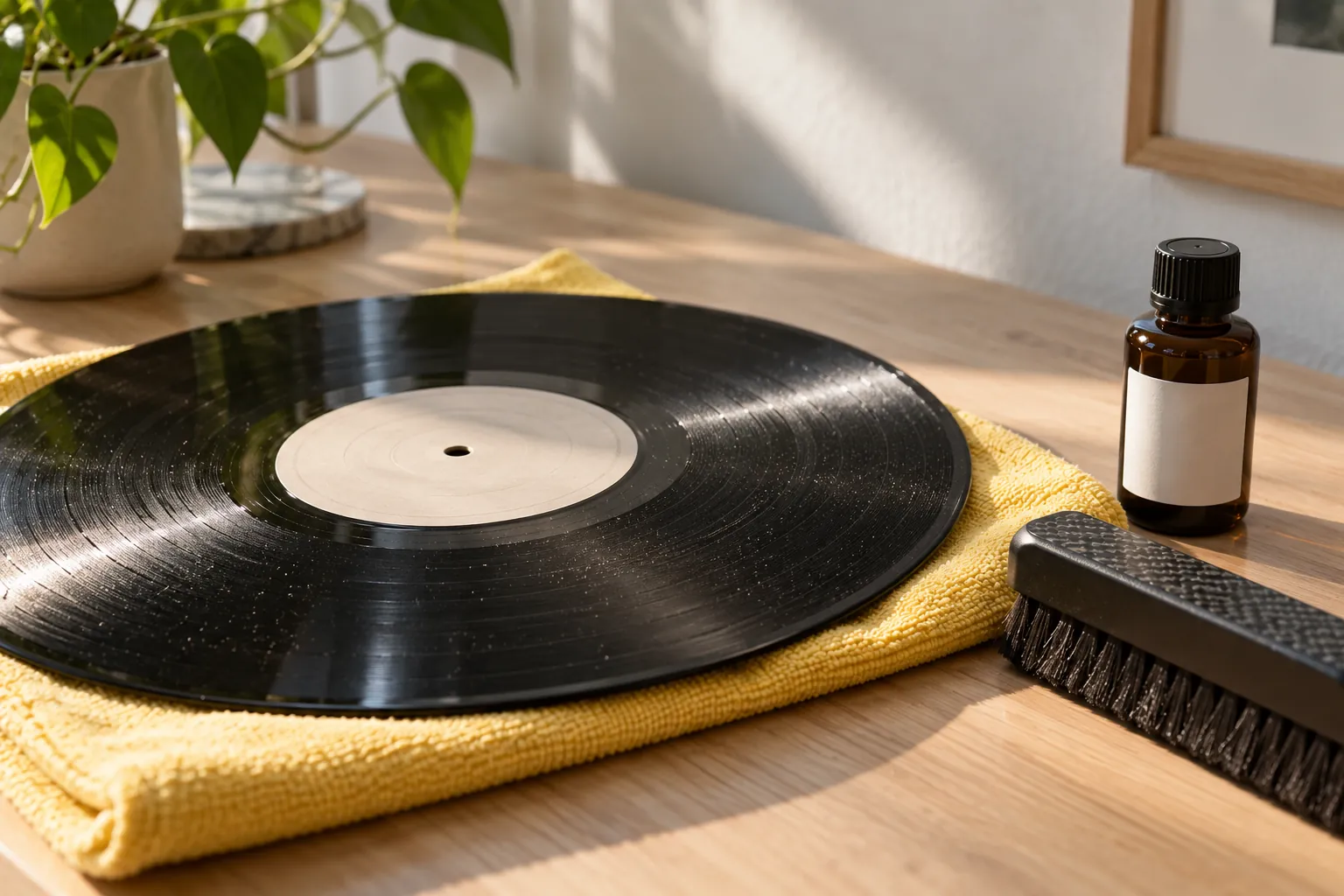
Cleaning a vinyl record is usually thirty seconds of work. Before playing, run a clean anti-static brush gently over the spinning record. You are lifting off loose dust, not polishing. Touch the playing surface as little as possible and hold a record by its edge and its label.
Clean the stylus carefully too, following the maker's instructions. A dirty stylus drags dust through the groove and makes a perfectly good record sound needlessly dull.
The brush technique is simple and still often goes wrong. Set the record spinning, rest the brush lightly on the surface so the bristles follow the grooves, and leave it there for two or three turns. Then pull it away towards the edge, not upwards, or the dust it has collected falls back onto the record. Tap the brush clean after use and store it covered; a dusty brush puts back more than it takes off.
Dry or wet: what a record tells you
Light dust, the odd click and a little noise between tracks: that is a dry brush and nothing more. A grey haze over the surface, fingerprints, a record that still crackles after brushing, or a second-hand record when you do not know where it has been: that calls for a wet clean. The haze is dirt sitting in the groove, and a brush cannot reach it.
Hold the record at an angle to the light from a window. What you see then is scratches (they will not come out), dirt in the groove (that will come out) and dust (that comes off straight away). That way you know beforehand what a clean will and will not fix, which saves disappointment.
Wet cleaning a record: when it is needed
A second-hand record with visible grime or stubborn crackle needs a wet clean. Use products made for records and let it dry completely before it goes back in its sleeve. Stay away from kitchen products and harsh cleaners, because they leave a residue or damage the label.
Do not expect too much either. A click can simply be in the pressing, and then it will not come out. Cleaning is maintenance, not restoration.
By hand it goes like this: lay the record on a clean, soft cloth, put a small amount of cleaning fluid on a microfibre cloth (not straight onto the record, so the label stays dry), and wipe along the grooves, so in circles, never from the centre outwards. Take up the moisture with a second, dry microfibre cloth, again along the grooves, and stand the record upright in a drying rack until it is completely dry. Allow about ten minutes per record, drying included.
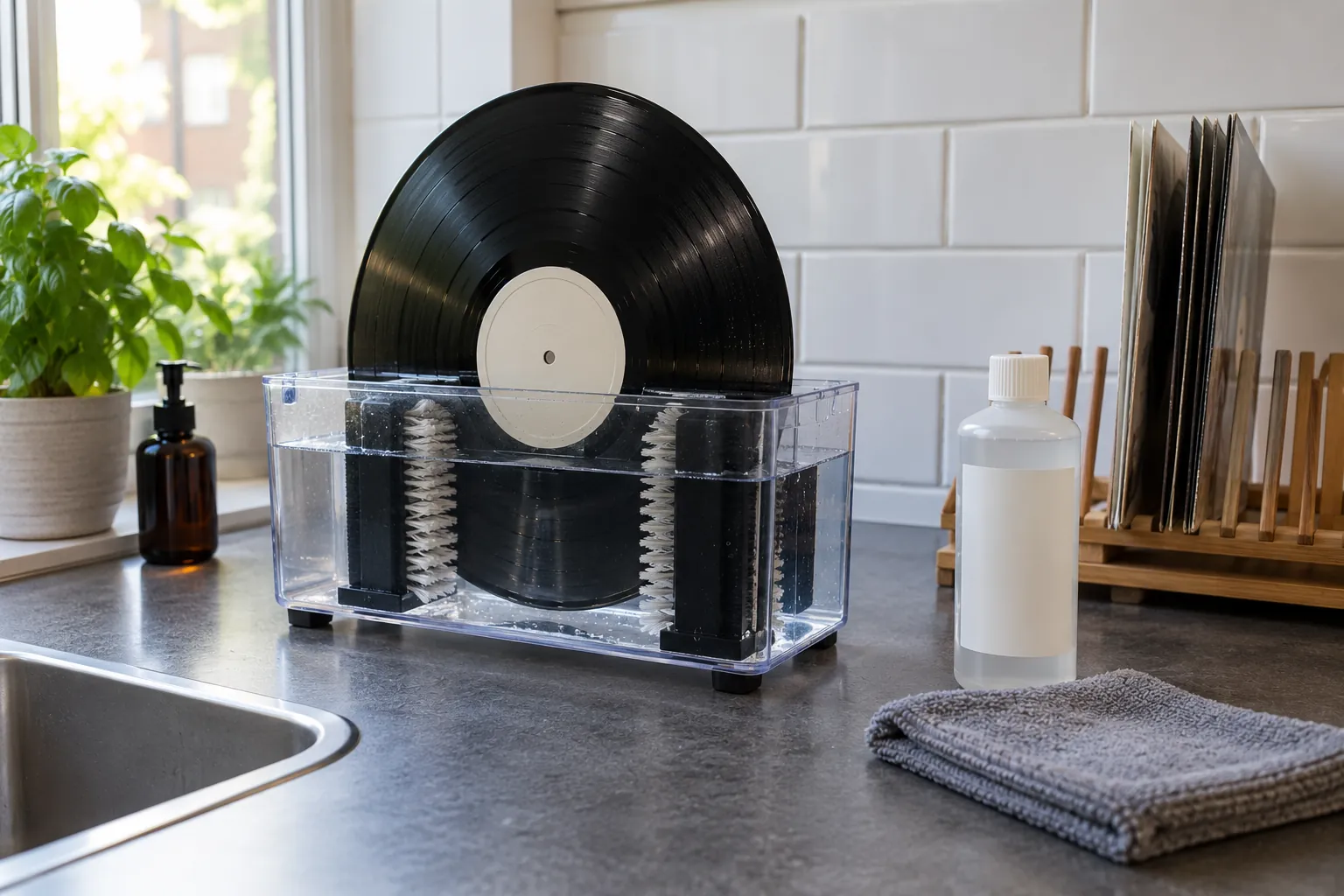
A simple record washer with a bath and two brushes does the same with less handwork: you put the record in the bath, turn it round a few times and stand it in the rack. A bath like that costs a few tens of euros and is worth it as soon as you buy more than a handful of second-hand records a year. A vacuum machine or an ultrasonic cleaner is more thorough and faster, but starts at a few hundred euros and only makes sense if you regularly clean large batches.
What you never use
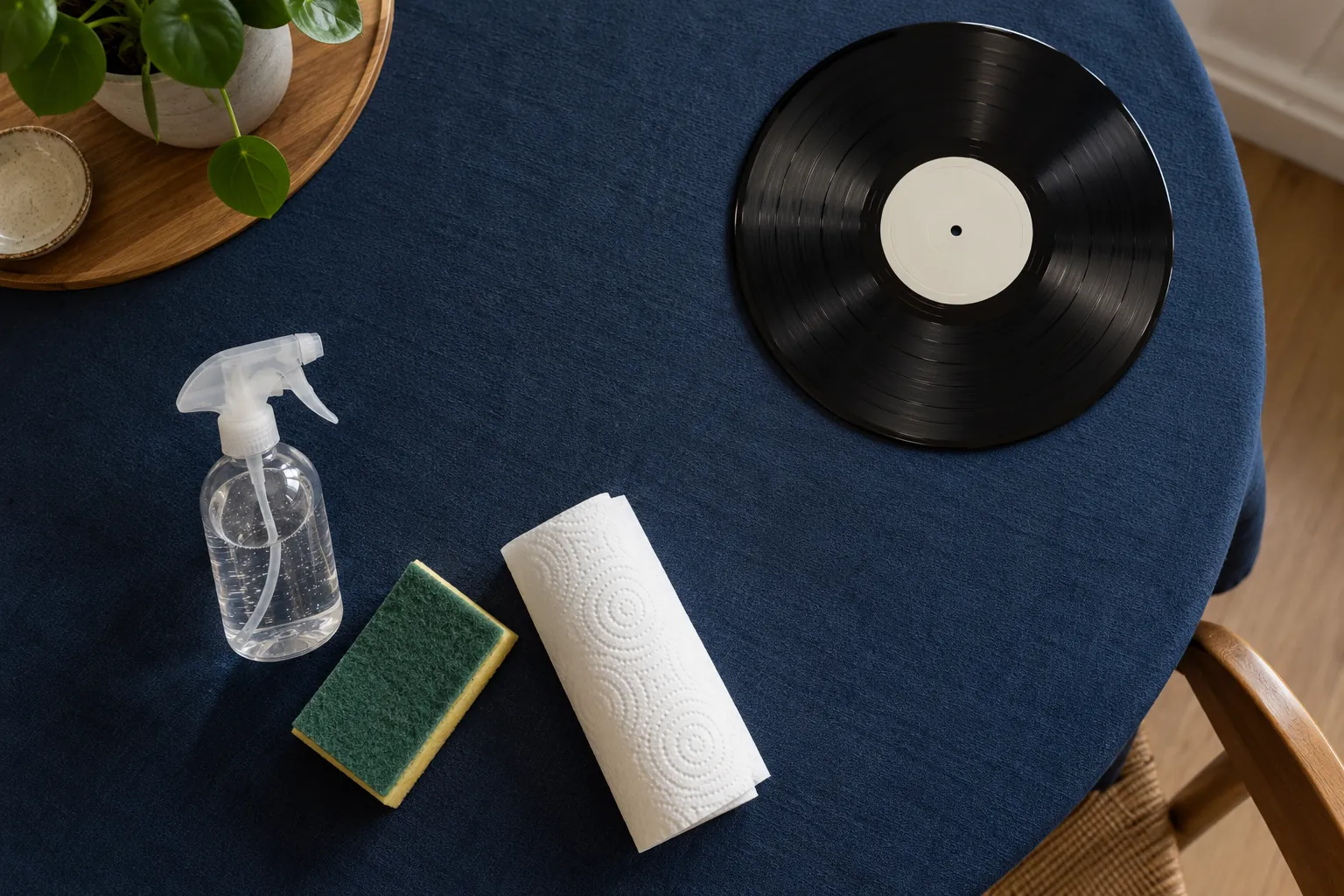
Tap water leaves limescale in the groove, and you hear that limescale afterwards as noise that was not there before. Use demineralised or distilled water if you make your own mix. Washing-up liquid, all-purpose cleaner and glass cleaner leave a film that attracts dust and fouls the stylus. Alcohol at high concentrations can draw the plasticisers out of vinyl and attacks old shellac records from before the fifties straight away.
Kitchen roll and scouring pads scratch, however soft they feel; the fibres are harder than vinyl. A spray bottle aimed straight at the record wets the label, and a wet label lifts or bubbles. And the old trick with wood glue, which you spread on and peel off once dry, sometimes works, but get it wrong once and the glue is in the groove instead of the dirt.
So the list for home is short: a carbon fibre brush, two microfibre cloths, a record cleaning fluid or your own mix of distilled water with a drop of isopropyl alcohol, and a drying rack. That is all you need, and anything extra is for convenience, not for the result.
The inner sleeve does half the work
A cleaned record that slides back into a dusty paper inner sleeve starts all over again. Anti-static inner sleeves are a small improvement for records you play often. Store them upright, not packed too tightly, and out of the sun.
Once that small routine is in place, you hardly have to think about it.
Static charge is why a record attracts dust the moment you take it out of its sleeve, especially in winter when the air is dry. An anti-static brush takes some of it away; an inner sleeve of polyethylene or lined paper stops the charge building up as you take the record out. If you are plagued by crackle that comes straight back after brushing, you usually have a static problem, not a dirt problem.
Do not forget the stylus
Everything on the record ends up on the stylus, and a stylus with a ball of fluff on it sounds dull and distorts in loud passages. Brush the stylus with a small stylus brush from back to front, in the direction the record moves under the stylus, never sideways and never from front to back; that way you do not bend the cantilever. Two or three gentle strokes are enough.
A gel pad that you lower the stylus onto a few times removes more stubborn dirt without any brushing and is the safest method for most people. Use fluid on the stylus only if the cartridge maker allows it, because on some cartridges the fluid dissolves the glue holding the tip. Use the stylus brush every few records, the gel pad once a week or when you can hear it is needed.
New records too
A new record is not automatically a clean record. It comes out of the press with a thin layer of release agent and with paper fibres from the inner sleeve it was slid into at the factory, and you hear that as a faint noise that should not be there. One wet clean before the first play removes it, and after that the dry brush is enough for years.
Put the new record straight into an anti-static inner sleeve as well, and keep the original paper sleeve next to the record inside the outer sleeve. That way you keep the record clean and the packaging complete, and the routine stays what it should be: thirty seconds before playing, and nothing more.
Frequently asked questions
- How do you clean vinyl records?
- Before every play: an anti-static brush over the spinning record, pulled away towards the edge. For a haze, fingerprints or crackle that stays after brushing: a wet clean with record cleaning fluid on a microfibre cloth, along the grooves, then left upright to dry. Never use tap water, washing-up liquid or kitchen roll.
- How do you clean a record that keeps crackling?
- First check whether it is dirt or static. If the crackle comes straight back after brushing, especially in winter when the air is dry, it is usually static: an anti-static brush and an inner sleeve of polyethylene or lined paper help more than cleaning. If you see a grey haze or the clicks stay in the same places, wet clean the record with record-cleaning fluid on a microfibre cloth, following the grooves, and let it dry upright. A click that stays after that is in the pressing or is a scratch.
- Can you clean records with water and washing-up liquid?
- Better not. Tap water leaves limescale in the groove and washing-up liquid leaves a film that attracts dust. If you want to mix something yourself, use distilled water with a drop of isopropyl alcohol, and dry the record with a clean microfibre cloth. A record cleaning fluid is cheap and works better.
- How often should you clean records?
- Dry brushing before every play. Wet cleaning only when a record asks for it: a newly bought second-hand record, visible grime or crackle that stays after brushing. A record that is stored clean in an anti-static inner sleeve does not need a wet clean for months or years.
- Is a record washer worth it?
- A simple washing bath with brushes costs a few tens of euros and pays off as soon as you buy more than a handful of second-hand records a year: less handwork, a more even result. A vacuum machine or ultrasonic cleaner from a few hundred euros only makes sense if you regularly clean large batches.