
The problem: Your records no longer fit, but every cabinet you look at is too shallow, too long or far too expensive for what it does.
The short route: Choose on compartment size and load-bearing, not looks: 33 centimetres deep and high, and a divider every sixty centimetres.
The size it all comes down to
An LP sleeve is about 31.5 by 31.5 centimetres. With an outer sleeve round it that becomes a little more, and a cabinet has to clear that: allow at least 33 centimetres high and 33 centimetres deep per compartment. That one number rules out most furniture in the shop, because an ordinary bookcase is 25 to 30 centimetres deep and leaves your records sticking out. Sleeves that stick out are exactly the sleeves that get damaged.
The second number is weight. A hundred records weigh over twenty kilos, and a shelf a metre wide with no support in the middle sags under that. Once the shelf bows, the records in the middle get squeezed and the ones at the ends lean. A compartment or a divider every sixty centimetres solves that, and that is also why cabinets with compartments have become the standard for records.
With those two numbers you can judge any cabinet without taking a tape measure to the shop: does an LP fit in it with room to spare, and is the shelf supported somewhere. Everything after that is taste and budget.
The cube shelf
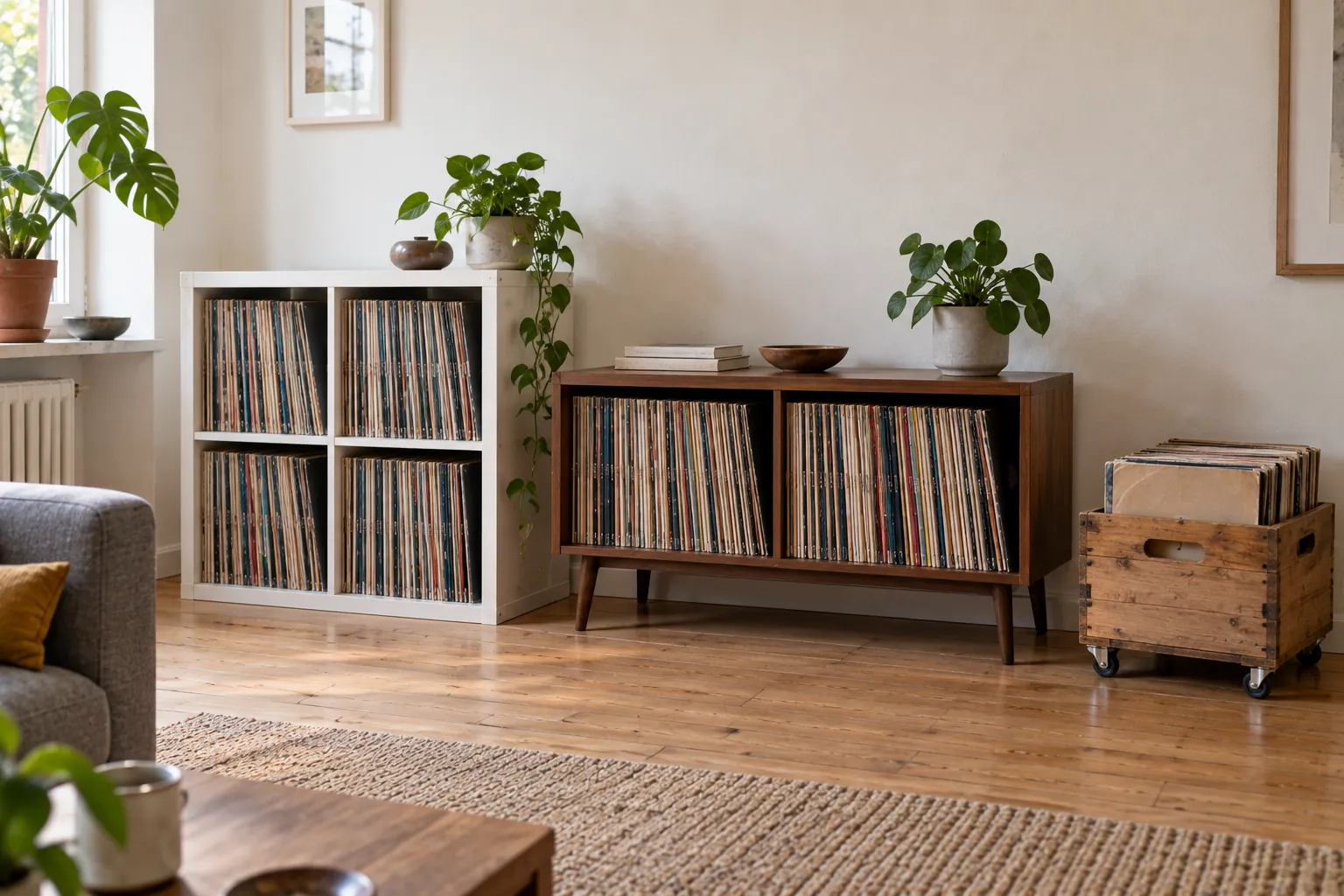
The unit with open compartments of about 33 by 33 centimetres is the standard solution, and rightly so. It fits, it is available everywhere, it costs little, and every compartment is its own divider, so nothing can sag. One compartment takes 50 to 60 records, slightly fewer with outer sleeves and double albums. A four-compartment unit holds about 200 records, eight compartments about 400.
With the cheapest versions, watch the material. A unit of thin chipboard wrapped in paper foil holds twenty kilos per compartment, but not if you move it a few times; the corners and the back panel give up first. A thicker board or a unit with a proper back panel stays square, and square is what keeps the records upright.
Standing or lying on its side makes no difference to the records. On its side you get a long, low cabinet a turntable can sit on; standing up saves floor space. Either way, put it against an inside wall, not by the radiator and not in the sun.
The sideboard and the ordinary cabinet
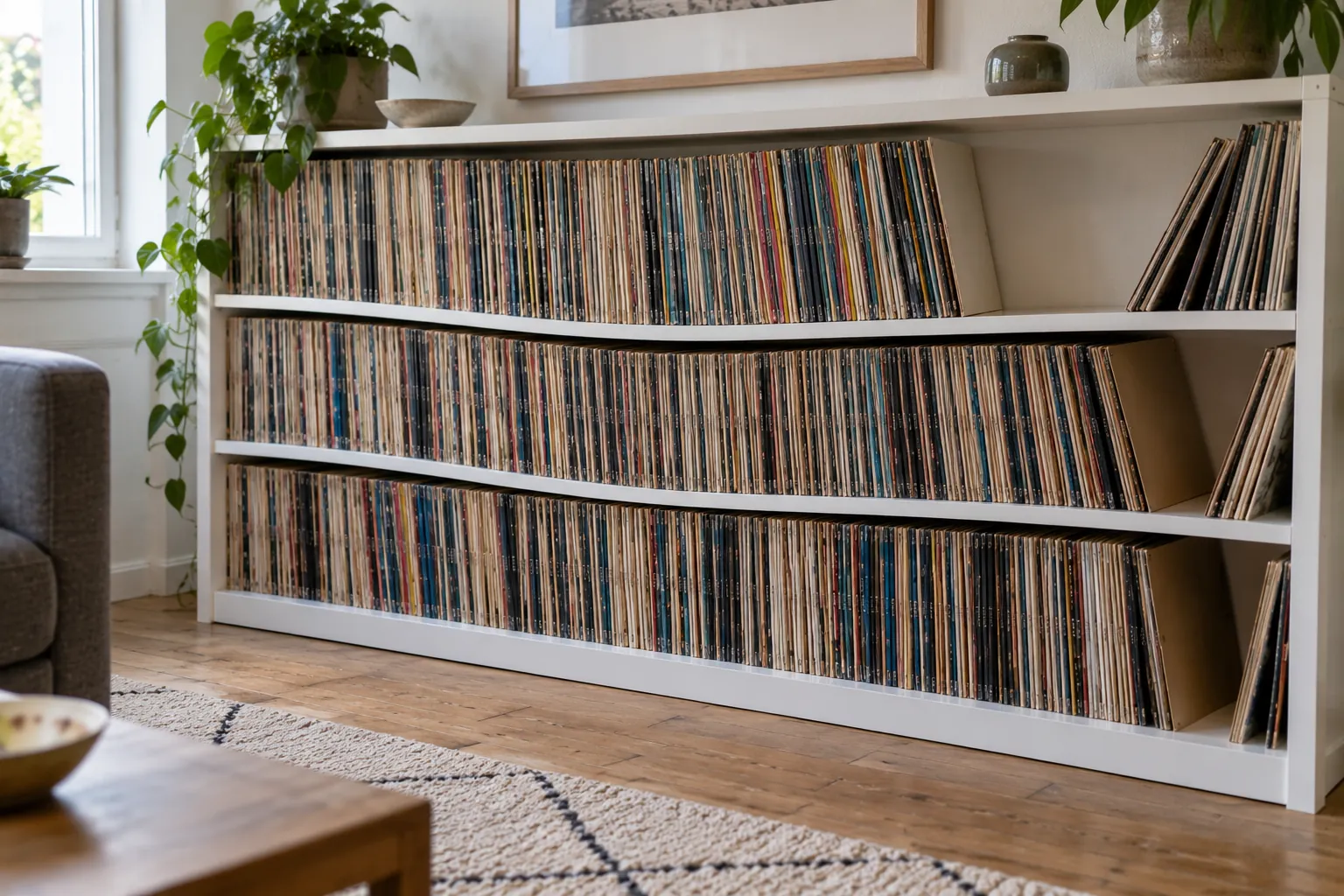
A low sideboard with open compartments or doors is the nicest solution for a living room and the hardest to buy well. Many sideboards are 40 centimetres deep, which is plenty, but have compartments a metre wide with no divider, which does not work once they are full. So look at the layout, not the depth: a sideboard with three narrow compartments is better than one with two wide ones.
Doors are a matter of taste with one practical consequence: behind a closed door dust stays out, but you cannot see what you have, and what you cannot see you play less. If you use your collection, open compartments suit you better; if you store it, doors.
An ordinary bookcase can still work if you lay it on its side or if the shelves are adjustable and you support them every sixty centimetres. Measure the depth first, though. If it is 28 or 30 centimetres, the records stick out and the bookcase is unsuitable, however well it fits otherwise.
The crate and the box on wheels
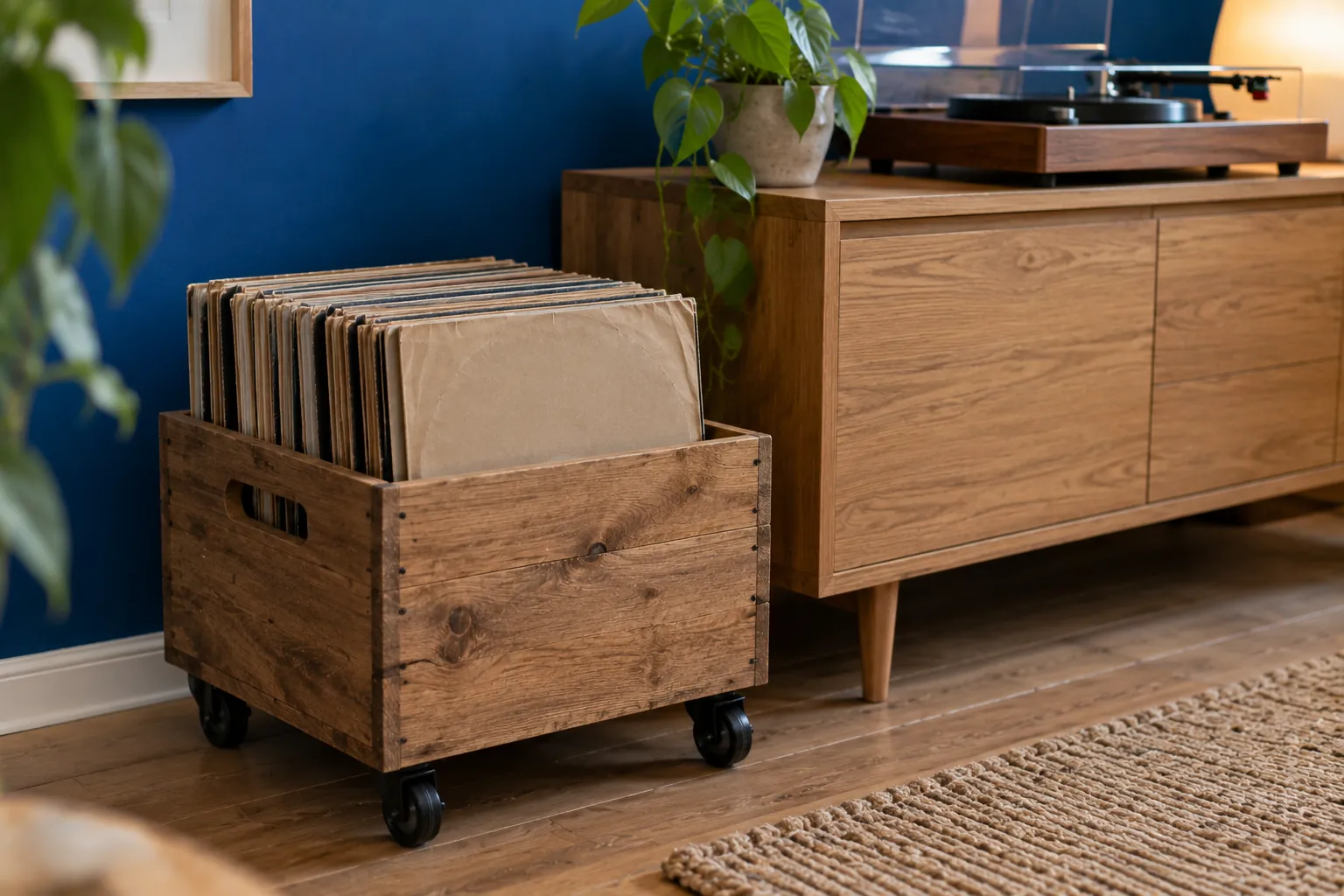
A wooden crate or a box on wheels is not a cabinet, and that is exactly why it works. It takes 40 to 60 records, stands next to the turntable and keeps what you are playing these weeks within reach, so you are not going through the whole cabinet every time. Wheels also make it movable, and a full box of records is not something you want to lift.
Watch two things. The box must be tall enough to keep the records upright, at least halfway up the sleeve, or they fall forward and bend. And do not count on a crate as your main storage: records standing in an open box catch more dust than records in a cabinet, and a stack of crates is a wobbly tower.
Cabinets made specially for records
There are cabinets in which the records lean back slightly, so you can flip through them like a crate in a shop. They have compartments to size, a solid build and often a top a turntable can stand on. They cost several times as much as a cube shelf, from a few hundred to well over a thousand euros.
The question is whether you browse or pick. If you have a collection of a few hundred records and regularly flip through it to choose something, you notice the difference every time. If you mainly pick what you already had in mind, you are paying for a gesture. For most living rooms a cube shelf, well filled and in the right spot, is exactly enough, and the difference in money is six months of records.
Making your own
Having a board cut to size and putting a divider in every sixty centimetres is the cheapest thing that fits. Work with plywood or solid wood at least 18 millimetres thick, keep the depth at 34 centimetres so the sleeves do not stick out, and always fix a cabinet taller than a metre to the wall. A cabinet full of records that tips over is heavy enough to do damage.
Expect material costs similar to a cheap cube shelf, but in the size and colour you want and with the load-bearing you choose. If you have no tools: DIY stores cut to size, and three boards and two dividers are an afternoon's work.
What it should cost
A simple four-compartment cube shelf costs around fifty to a hundred euros and holds about 200 records. A sturdier version or a wooden sideboard with the right layout sits between two and five hundred. A cabinet made specially for records starts at around four hundred and goes a long way up. A crate on wheels costs a few tens of euros.
Set that against what you are storing. For a collection of two hundred records, a fifty-euro cabinet is not a false economy but the right size; at a thousand records, a sturdy cabinet with real dividers is the difference between a wall full of music and a row of bent sleeves. How to then put the records in it is covered in the guide on storing records.
Frequently asked questions
- How deep does a record cabinet need to be?
- At least 33 centimetres, and 34 is more comfortable. An LP sleeve is about 31.5 centimetres and an outer sleeve makes it a little bigger. In an ordinary bookcase 25 to 30 centimetres deep the sleeves stick out, and those edges are exactly what gets damaged. The compartments also need to be at least 33 centimetres high.
- How many records fit in a cube shelf?
- About 50 to 60 per 33 by 33 centimetre compartment, a little fewer if many records have an outer sleeve or are double albums. Four compartments hold about 200 records, eight compartments about 400. Allow for over twenty kilos per hundred records, so the unit must stand firmly and preferably be fixed to the wall.
- Can you use an ordinary bookcase for records?
- Only if it is deep enough and the shelves are supported. Measure the depth: under 33 centimetres the sleeves stick out. And put a divider every sixty centimetres, because a one-metre shelf sags under the weight of records and squeezes them in the middle.
- What does a good record cabinet cost?
- A four-compartment cube shelf for about 200 records costs fifty to a hundred euros. A sturdy wooden sideboard with the right layout two to five hundred. A cabinet made specially for records, with tilted compartments to flip through, starts at around four hundred euros. A crate on wheels costs a few tens of euros.